
Secret Tip To Explode Traffic Growth
I will earn commissions if you click affiliate links or make a purchase at no additional cost to you.
Getting more traffic to a website sounds simple until you actually try to do it. You publish an article, share it on social media, maybe send it to your email list, and then you wait. Sometimes a few visitors show up. Other times, you spend hours creating content only to watch the analytics stay frustratingly quiet. The good news is that growing website traffic does not always require publishing more content, spending thousands of dollars on advertising, or becoming an expert at every social media platform.
Sometimes the biggest growth comes from something much simpler: getting more value from the content and traffic opportunities you already have. One of the most overlooked strategies is what I like to call the content multiplier approach. Instead of constantly asking, “What should I publish next?” you start asking, “How can I make what I already have work harder?” That small change in thinking can completely change the way you approach traffic growth.
Stop Chasing New Content All The Time
There is a common belief that successful websites need to publish constantly. While having fresh content can certainly help, publishing more articles does not automatically mean getting more visitors. Imagine you have 100 articles on your website, but only 10 consistently attract visitors. Creating another 20 articles may not solve the problem. You could end up with 120 articles and still receive most of your traffic from the same handful of pages. Instead, take a closer look at those successful pages. Why are people finding them? What keywords are bringing visitors? Which sections are people reading? Are visitors clicking other pages? Could you add information that makes the page more useful? Could the article answer the searcher’s question more completely? Your existing traffic can reveal opportunities that keyword research alone might not show you. Sometimes the easiest way to grow traffic is not to start from zero. It is to improve something that is already working.
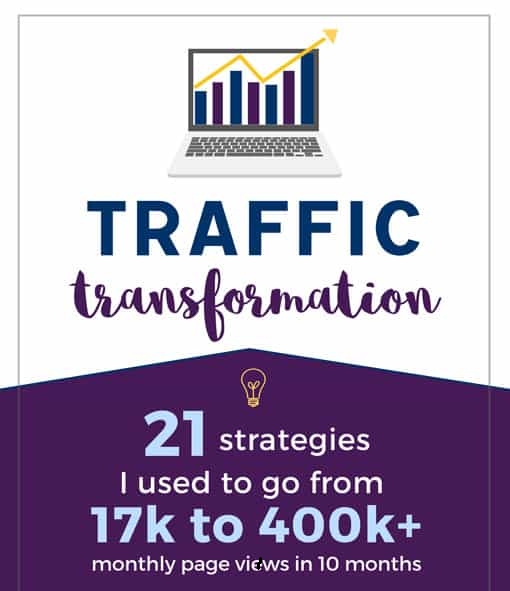
If you are putting endless hours into your blog but your google analytics numbers just won't budge this guide is exactly what you need to read next. This traffic transformation eBook walks you through the exact 21 hands on strategies used to shoot my own blog traffic from 17,000 to over 400,000 monthly page views. It completely skips the fluff and breaks down how to make your existing content way more shareable, choose keywords that actually rank and clean up your site navigation.
The Secret Is Finding Your Traffic Winners
Every website has traffic winners. They might not necessarily be your favorite articles. They might not even be the articles you expected to perform well. But somewhere in your analytics, there are probably pages receiving more impressions, clicks, visitors, or engagement than others. These pages are extremely valuable because they have already demonstrated that people are interested in the topic. Suppose you have an article called “25 Ways To Save Money Shopping Online.” Maybe it receives 500 visitors every month while most of your other articles receive 50. Instead of immediately writing another unrelated article, look at what makes that page successful. Perhaps people are finding it through searches related to online coupons, discount shopping, cashback websites, or money-saving apps. Those related searches can become the foundation for additional content. You could create articles that answer those specific questions and naturally connect them to your successful article. Now you are not simply creating content randomly. You are building a network around a topic that already attracts visitors.
Build Content Clusters Instead Of Random Articles
One of the most powerful ways to turn one successful article into many traffic opportunities is through content clusters. A content cluster is basically a group of related articles that cover different aspects of a larger topic. For example, imagine your main topic is saving money. You might have one comprehensive article about saving money online. Around that article, you could create related content about coupon strategies, cashback apps, grocery savings, discount websites, free samples, budgeting tools, and ways to reduce monthly expenses. Each article focuses on a specific search intent while connecting naturally to the others. This gives readers more reasons to explore your website. It also helps search engines understand that your website has substantial information about the subject. The important thing is not to create dozens of nearly identical articles. Each page should provide something genuinely useful and answer a slightly different question. The goal is depth, not repetition.
Update Your Old Articles
Here is another traffic opportunity that many website owners completely overlook. Your old content may still have potential. An article you published two or three years ago might have originally attracted visitors but gradually lost visibility. Maybe the information became outdated. Maybe competitors created better resources. Maybe search behavior changed. Or perhaps your article simply needs more depth. Updating an existing article can sometimes be much easier than creating a completely new one. Start by reviewing the headline, introduction, headings, examples, statistics, links, and overall usefulness of the article. Ask yourself whether someone searching for the topic today would be satisfied with what they found. If the answer is no, improve it. Add current information. Remove outdated sections. Improve explanations. Add relevant examples. Strengthen the introduction. Make the article easier to read. Do not update an article simply by changing the publication date. The actual content needs to become better.
Improve Your Headlines
Your headline is one of the first things people see. You can have an excellent article, but if your headline does not make people want to click, you may be leaving traffic on the table. A strong headline should communicate a clear benefit while creating enough curiosity to encourage the reader to continue. Compare a generic headline like “Ways To Save Money” with something more specific such as “31 Simple Ways To Cut Your Monthly Expenses Without Feeling Miserable.” The second headline gives the reader a clearer reason to click. However, avoid turning your headlines into exaggerated clickbait. If the article does not deliver what the headline promises, visitors will quickly lose trust. A good headline creates curiosity. A great headline creates curiosity and accurately sets expectations.
Pay Attention To Search Intent
One of the biggest mistakes content creators make is focusing only on keywords. Keywords matter, but understanding why someone searched for something can be even more important. Consider someone searching for “best budgeting apps.” They may want a list of apps. Someone searching for “how to create a budget” probably wants instructions. Someone searching for “50 30 20 budget rule” may want an explanation of a specific budgeting method. The words may overlap, but the intent is different. If you understand what the person actually wants, you can create content that provides a much better answer. Before writing an article, think about the person sitting behind the search query. What problem are they trying to solve? What information are they expecting? What would make them feel like they found exactly what they needed? Answer those questions, and your content becomes much more useful.
Create Better Internal Links
Internal linking is one of the simplest traffic strategies because you control it completely. An internal link connects one page on your website to another relevant page. The trick is to make those links useful rather than stuffing links everywhere. If you are writing about saving money on groceries and you already have an article about coupon strategies, linking to that article makes sense. The reader might naturally want additional information, so the link gives them a next step. This can increase page views and help visitors spend more time exploring your website. Internal links can also help distribute attention across your content. If one page receives significant traffic, use appropriate opportunities to guide some of those visitors toward other valuable pages. Think of your website like a neighborhood. You do not want every visitor to stop at one house and leave. You want clear paths that make it easy to discover the rest of the neighborhood.
Turn One Idea Into Multiple Pieces Of Content
Another secret to traffic growth is repurposing. You do not have to create every piece of content from scratch. A single detailed article can become several different pieces of content. For example, a long article about saving money could inspire a short social media post, a video, an email newsletter, a checklist, a series of smaller articles, or a discussion topic. The original article becomes the foundation. This is especially helpful if you are running a website by yourself and do not have unlimited time. Instead of constantly thinking about what to create next, think about how many useful formats you can create from something you have already researched. Repurposing is not about copying and pasting the same content everywhere. It is about presenting the core idea in a way that fits a different platform or audience.
Give People A Reason To Share Your Content
Traffic growth becomes much easier when other people help distribute your content. But simply adding “Share this article” at the bottom of a page is not enough. People share content when it provides value, makes them look helpful, entertains them, teaches them something, or gives them information they think someone else needs. That means creating genuinely shareable resources can be extremely powerful. Detailed guides, original research, helpful comparisons, useful checklists, interesting statistics, practical tutorials, and comprehensive explanations can all have sharing potential. Ask yourself before publishing an article: “Who would I send this to?” If you cannot think of anyone, the content may need a stronger purpose.
If you are putting endless hours into your blog but your google analytics numbers just won't budge this guide is exactly what you need to read next. This traffic transformation eBook walks you through the exact 21 hands on strategies used to shoot my own blog traffic from 17,000 to over 400,000 monthly page views. It completely skips the fluff and breaks down how to make your existing content way more shareable, choose keywords that actually rank and clean up your site navigation.
Focus On Long-Tail Searches
Big keywords can be incredibly competitive. Trying to rank immediately for broad phrases like “make money,” “fitness,” or “recipes” can be difficult, especially if your website is relatively new. Long-tail searches can provide a much more realistic starting point. A long-tail keyword is generally a more specific search phrase. Instead of targeting “online jobs,” for example, you might target something like “online jobs that pay weekly with no experience.” The audience may be smaller, but that audience can be much more targeted. When you consistently create useful content around specific questions, you can build traffic from many smaller searches. Those smaller streams can eventually add up to significant traffic.
Make Your Website Easy To Navigate
Traffic growth is not just about attracting people. It is also about keeping them. If visitors arrive at your website and cannot figure out where to go next, they may leave after reading one page. A simple navigation structure can make a huge difference. Your categories should make sense. Your most valuable content should be easy to find. Related articles should be connected. Your pages should load properly on mobile devices. Think about what happens immediately after someone finishes reading an article. Do they have an obvious next step? If not, you may be wasting some of the traffic you worked so hard to earn.
Study Your Competitors Without Copying Them
Competitor research can reveal opportunities. Look at websites ranking for the topics you want to cover. What questions do they answer? What sections do their articles include? What information appears to be missing? Are their articles difficult to read? Do they provide outdated information? Are there questions people are asking in comments or online communities that those articles ignore? You are not trying to copy competitors. You are looking for gaps. If ten websites answer the same question in almost exactly the same way, perhaps there is an opportunity to create something more useful, clearer, more current, or more comprehensive. Sometimes your advantage is simply explaining something better.
Don’t Ignore Social Traffic
Search engines are important, but they are not the only source of visitors. Social media can help expose your content to people who may never discover it through search. The key is not to post a link once and forget about it. Different platforms have different audiences and expectations. A long educational article might work well as a series of short posts. A visual topic might perform better as an image-based post. A tutorial might become a short video. Again, the goal is repurposing. You already did the hard work of developing the idea. Now find additional ways to distribute it.
Build An Email Audience
There is one traffic source you actually own more directly than search or social media: your email audience. When someone visits your website, there is no guarantee they will return. But if they willingly subscribe to your email list, you have another opportunity to bring them back. You can send useful updates, highlight new articles, recommend older resources, and create themed newsletters around your best content. The key is to provide value. Nobody wants an inbox filled with endless promotions. Give subscribers something worth opening. Even a simple weekly email featuring your newest and most useful content can become a reliable source of returning traffic.
Watch What Your Visitors Are Doing
Analytics can feel overwhelming, but you do not need to study every number. Start with a few basic questions. Which pages receive the most visitors? Which pages are gaining traffic? Which pages are losing traffic? What search queries are bringing people to your website? Which pages keep people engaged? Where do visitors leave? The answers can guide your content strategy. If an article receives a lot of impressions but few clicks, the headline or search snippet may need improvement. If an article gets visitors but they leave quickly, the content may not satisfy the search intent. If a page receives steady traffic but sends visitors nowhere else, better internal linking might help. Your analytics are essentially telling you what your audience is doing. Pay attention.
Be Patient With Traffic Growth
One of the hardest parts of building website traffic is accepting that growth is rarely instant. You might publish an article today and see very little activity for weeks or months. That does not necessarily mean the article failed. Traffic growth can compound. One useful article brings visitors. Some of those visitors discover another article. A search engine begins recognizing your website for a topic. Your internal links strengthen the relationship between pages. Someone shares your article. Another website references it. Slowly, the pieces begin connecting. This is why consistency matters. You do not need to go viral every week. You need to keep creating useful assets that can continue attracting visitors long after publication.
The Real Secret Is Thinking Bigger About Every Visitor
Here is the traffic strategy that ties everything together. Do not think of a visitor as a single pageview. Think of a visitor as an opportunity to build a relationship. Someone arrives because they have a question. Your job is to answer it well enough that they trust your website. Then give them another useful resource. Then another. Maybe they subscribe to your email list. Maybe they bookmark your website. Maybe they share your article. Maybe they return next week. That is how traffic becomes an audience. And an audience is far more valuable than a random collection of pageviews.
If you are putting endless hours into your blog but your google analytics numbers just won't budge this guide is exactly what you need to read next. This traffic transformation eBook walks you through the exact 21 hands on strategies used to shoot my own blog traffic from 17,000 to over 400,000 monthly page views. It completely skips the fluff and breaks down how to make your existing content way more shareable, choose keywords that actually rank and clean up your site navigation.
Final Thoughts
The secret to exploding traffic growth is not necessarily some mysterious SEO trick or expensive advertising campaign. In many cases, it comes down to getting smarter about the content, visitors, and opportunities you already have. Find the pages that are already attracting attention. Improve them. Build related content around successful topics. Understand search intent. Strengthen internal links. Repurpose your best ideas. Target specific long-tail searches. Make your website easier to navigate. Build an email audience and pay attention to what your analytics are telling you.
Most importantly, stop measuring your progress only by how much new content you publish. A website can grow faster when every piece of content has a purpose and every visitor has somewhere useful to go next. That is the real secret. You are not simply trying to get more people to visit your website. You are building a system where useful content attracts people, great experiences keep them interested, and strong connections give them a reason to come back. Once you start thinking about traffic that way, growth becomes less about chasing the next big trick and more about making everything you publish work harder for you.