
8 Strategies To Get Boatloads Of Traffic To Your Blog Post
I will earn commissions if you click affiliate links or make a purchase at no additional cost to you.
Writing a great blog post is only half the battle. You can spend hours researching a topic, carefully choosing your words, creating an eye catching headline, and polishing every paragraph, but none of that matters much if nobody finds your article. Getting traffic to your blog is where the real work begins. The good news is that you do not need a massive advertising budget or a huge social media following to attract readers.
There are proven strategies you can use to increase visibility, reach the right audience, and encourage people to visit your blog. Some methods produce results quickly, while others take time to build momentum. The smartest approach is to combine several strategies instead of depending on a single source of traffic. Whether you have just published your first article or have been blogging for years, these eight strategies can help you get more eyes on your content and turn occasional visitors into regular readers.
1. Create Content People Are Actually Searching For
One of the simplest ways to increase blog traffic is to write about subjects people are already searching for. It sounds obvious, but many bloggers make the mistake of writing whatever happens to interest them without considering whether anyone else is looking for the information. Before creating an article, think about your audience. What questions are they asking? What problems are they trying to solve? What information do they need? What phrases might they type into Google or another search engine?
For example, instead of writing a broad article called “My Thoughts About Saving Money,” you could create a more specific post such as “How To Save $500 A Month On A Tight Budget.” The second topic gives readers a clear reason to click because it addresses a specific goal.
Keyword research can help you discover these opportunities. You can use keyword research tools to identify search phrases related to your niche and understand the kinds of questions people are asking. You do not need to target only enormous keywords. In many cases, specific long-tail keywords can be excellent opportunities for smaller blogs because they tend to match a more focused search intent. The goal is not simply to attract visitors. You want to attract visitors who are genuinely interested in what you offer.
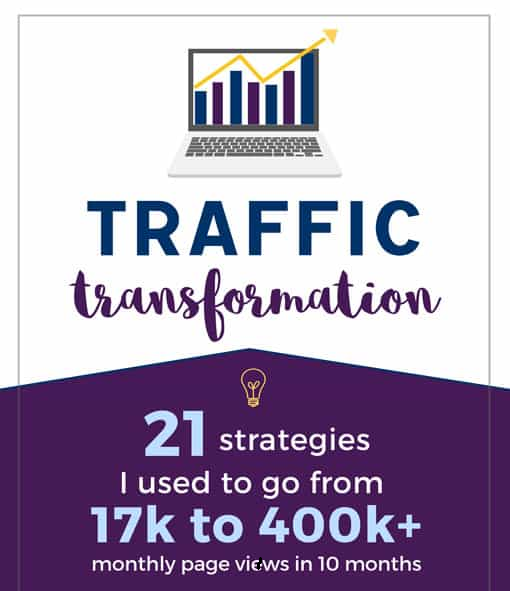
If you are putting endless hours into your blog but your google analytics numbers just won't budge this guide is exactly what you need to read next. This traffic transformation eBook walks you through the exact 21 hands on strategies used to shoot my own blog traffic from 17,000 to over 400,000 monthly page views. It completely skips the fluff and breaks down how to make your existing content way more shareable, choose keywords that actually rank and clean up your site navigation.
2. Write Headlines That Make People Want To Click
Your headline can determine whether someone reads your article or scrolls past it. Think about how many headlines people encounter every day. Your blog post is competing against news stories, social media updates, videos, emails, advertisements, and countless other distractions. A strong headline needs to communicate value quickly. A good headline should tell readers what they can expect while giving them a reason to care. Compare “Ways To Improve Your Blog” with “10 Simple Ways To Get More Traffic To Your Blog.” The second headline is more specific and immediately communicates a benefit.
Numbers can work well in headlines because they make the content feel organized and easy to consume. Questions, how-to headlines, mistakes, secrets, comparisons, and specific promises can also attract attention. However, avoid creating headlines that promise something the article does not deliver. Clickbait may generate an initial click, but disappointing readers can hurt your credibility. A strong headline creates curiosity while remaining honest. You should also consider your headline when sharing the article on social media. A headline that works well in search results may need a slightly different presentation when you’re promoting it to your followers.
3. Optimize Your Posts For Search Engines
Search engine optimization, commonly called SEO, can become one of your most valuable sources of long-term blog traffic. SEO is essentially about helping search engines understand your content and helping users find information that matches what they are looking for. Start by choosing a primary topic or keyword for each article. Use it naturally in your headline, introduction, relevant subheadings, and throughout the article where appropriate. Do not stuff the same keyword into every sentence. Search engines are designed to understand topics and context, so your writing should sound natural.
Your article should also be organized clearly. Use descriptive headings and break long sections into readable paragraphs. This makes the article easier for both readers and search engines to understand. Internal linking is another useful SEO technique. When you publish a new article, look through your existing content and find related posts that you can link to. Then, when appropriate, link from older posts to the new article. This creates connections between your content and makes it easier for visitors to discover additional information.
Images should also have descriptive file names and appropriate alternative text when relevant. Your page should load reasonably quickly, and your website should provide a good experience on mobile devices. SEO is not usually an overnight traffic strategy. It can take time for content to gain visibility, especially if your website is relatively new. But a well-optimized article can continue bringing visitors long after you publish it.
4. Promote Every Blog Post On Social Media
Publishing an article and waiting for people to find it is rarely enough. Every time you publish something valuable, give it a promotional push. Social media can help you put your content in front of people who might otherwise never discover your blog. You do not have to be active on every platform. Choose the platforms where your target audience actually spends time.
Turn the main idea from your article into several social media posts. You might create a short tip, an interesting statistic, a question, a quote from the article, a short video, or a simple explanation of one of the article’s key points. Instead of sharing the exact same message repeatedly, approach the article from different angles. For example, if you wrote an article about saving money, one social post could focus on grocery expenses while another could discuss subscription services. Both can lead people back to the same comprehensive article.
Social media promotion also becomes more effective when you participate in conversations rather than constantly dropping links. Answer questions, respond to comments, and provide useful information. People are more likely to click on your content when they recognize that you are genuinely trying to help rather than simply promoting yourself.
5. Build An Email List
If you want a reliable way to bring people back to your blog, start building an email list. Social media platforms can change their algorithms at any time. Search rankings can also fluctuate. An email list gives you another way to communicate directly with people who have already shown interest in your content. You can encourage visitors to subscribe by offering something useful in exchange for their email address. This could be a free guide, checklist, template, mini-course, resource list, or another relevant freebie.
Once someone subscribes, do not use the list only to announce new products. Send genuinely useful information. When you publish a new blog post, you can email your subscribers with a short introduction and a link to the full article. You can also occasionally revisit older articles and send readers to useful content they may have missed.
An email list can become especially valuable as your blog grows because every new subscriber represents someone who has voluntarily asked to hear from you. Over time, you can develop a relationship with those readers rather than relying on them to randomly discover your website.
6. Write Guest Posts For Other Websites
Guest posting can be a powerful way to introduce your blog to an entirely new audience. The concept is straightforward. You write a valuable article for another website, and depending on the site’s policies, you may receive an author bio or appropriate link back to your own website. The key is finding websites that already attract the type of audience you want.
If your blog is about personal finance, writing for a website about professional careers, entrepreneurship, budgeting, or small business could potentially put your content in front of relevant readers. If your blog focuses on cooking, you might look for websites that cover recipes, food, meal planning, or healthy living.
Do not approach guest posting as simply a way to collect links. Your first priority should be creating an excellent article for the host website. When readers find your guest post genuinely useful, they have a reason to learn more about you.
Guest posting can also help you establish relationships with other bloggers and website owners. Those relationships can lead to interviews, collaborations, podcast appearances, social media shares, and additional opportunities to reach new audiences.
7. Update And Repromote Your Older Content
One of the easiest ways to increase blog traffic may already be sitting inside your existing archive. Many bloggers constantly publish new articles while ignoring their older content. That can be a missed opportunity. Look through your analytics and identify older posts that have received traffic in the past. Ask yourself whether those articles could be improved.
Perhaps the information is outdated. Maybe you could add new examples, expand thin sections, improve the introduction, replace old links, update statistics, or make the article easier to read. Once the article has been improved, promote it again. You can share it on social media, include it in an email newsletter, link to it from newer articles, or create new content that naturally points readers toward it.
You can also turn one old article into multiple pieces of content. A long blog post might become several social media posts, a short video, an infographic, or a newsletter topic. This approach allows you to get more value from work you have already completed. Instead of constantly starting from zero, you are continually improving the library of content you already have.
8. Build Relationships And Encourage Sharing
Traffic often grows faster when you stop thinking about blogging as a solo activity. Other bloggers, creators, business owners, podcasters, journalists, and online communities can help expose your content to people who have never heard of you. Start by being useful.
Leave thoughtful comments on relevant websites. Participate in online discussions. Share other people’s useful content when it genuinely benefits your audience. Connect with creators in your niche without immediately asking them for favors. Over time, relationships can develop naturally. You might collaborate on an article, participate in an interview, appear on a podcast, contribute an expert quote, or create a joint project.
Another simple strategy is to make your content easy to share. Include useful information, original insights, practical examples, and memorable takeaways that readers will want to pass along. You can also mention other creators or businesses when they are genuinely relevant to your article. If you reference someone’s research, product, or useful resource, consider letting them know after the article is published. Do not expect everyone to share your work. Some will, some will not. The point is to create genuine connections and increase the number of opportunities for your content to be discovered.
Don’t Forget About Blog Comments And Communities
Online communities can be another source of targeted traffic, but you need to approach them carefully. Look for communities where people are already discussing subjects related to your blog. Instead of immediately posting links to your articles, participate in conversations and answer questions. If someone asks a question that your article thoroughly answers, you may be able to mention the resource when appropriate and allowed by the community’s rules.
The goal should be to provide value first. If people recognize your name as someone who consistently offers helpful answers, they may eventually become interested in your website. This approach can take more effort than simply dropping links everywhere, but it can produce higher-quality traffic because the people discovering your blog already have an interest in the subject.
If you are putting endless hours into your blog but your google analytics numbers just won't budge this guide is exactly what you need to read next. This traffic transformation eBook walks you through the exact 21 hands on strategies used to shoot my own blog traffic from 17,000 to over 400,000 monthly page views. It completely skips the fluff and breaks down how to make your existing content way more shareable, choose keywords that actually rank and clean up your site navigation.
Make Your Content Easy To Read
Getting someone to click on your blog post is only the beginning. If they arrive at your website and see huge blocks of text, confusing navigation, slow-loading pages, or an overwhelming design, they may leave immediately. Make your articles easy to scan. Use clear headings, short paragraphs, descriptive subheadings, relevant images, and plenty of breathing room between sections.
Write conversationally. Imagine you are explaining the topic to a friend who is interested but unfamiliar with the subject. Avoid using complicated language simply to sound impressive. Clear writing is usually more enjoyable to read. You should also make sure your website works well on smartphones and tablets. A significant portion of internet traffic comes from mobile devices, so your blog needs to provide a comfortable reading experience regardless of screen size.
Give Readers A Reason To Visit Again
Getting a visitor once is great, but getting that same visitor to return is even better. Think about what would make someone want to come back to your blog. Perhaps you publish weekly tutorials. Maybe you regularly create detailed guides. You could have a recurring series or consistently cover a particular topic. The more predictable and useful your content becomes, the easier it is to develop loyal readers.
You can also encourage visitors to explore additional articles. At the end of a post, recommend related content that naturally continues the subject. For example, if someone reads an article about starting a blog, you could direct them toward an article about creating content, another about SEO, and another about building an email list. This keeps people on your website longer and introduces them to more of your work.
Be Patient With Traffic Growth
One of the hardest parts of blogging is understanding that traffic growth often takes time. You might publish an article today and see very few visitors. That does not automatically mean the article is bad. SEO takes time. Social media posts have limited lifespans. New websites need time to build authority. Relationships with other creators take time to develop.
Instead of judging your entire blog based on one week of traffic, look for trends over several months. Pay attention to which topics attract visitors, which traffic sources perform well, and which articles keep bringing people back. If a particular topic consistently performs well, consider creating additional content around it. If a traffic source produces visitors who rarely engage with your website, you may want to focus more of your effort elsewhere. Your analytics are not just numbers. They are clues about what your audience wants.
If you are putting endless hours into your blog but your google analytics numbers just won't budge this guide is exactly what you need to read next. This traffic transformation eBook walks you through the exact 21 hands on strategies used to shoot my own blog traffic from 17,000 to over 400,000 monthly page views. It completely skips the fluff and breaks down how to make your existing content way more shareable, choose keywords that actually rank and clean up your site navigation.
Final Thoughts
Getting boatloads of traffic to your blog is rarely about one secret technique. Successful bloggers generally combine several strategies and continue refining them over time. Start by creating content people genuinely want. Research the questions your audience is asking and build useful articles around those topics. Write compelling headlines that communicate a clear benefit. Optimize your content for search engines so it can continue attracting visitors over time.
Then promote your work. Use social media, build an email list, explore guest posting, update older articles, participate in relevant communities, and develop relationships with other people in your niche. Most importantly, do not become obsessed with traffic numbers alone. Thousands of random visitors are not necessarily as valuable as a smaller group of readers who genuinely care about your subject.
Your goal should be to attract the right people and give them a reason to stick around. Keep publishing useful content, keep promoting it, keep studying your results, and keep improving your strategy. A blog rarely becomes a traffic powerhouse from one article. It happens when individual pieces of content begin working together to create a growing library of useful information.
The article you publish today could bring you visitors tomorrow, next month, or even years from now. When you consistently create valuable content and actively put it in front of the right audience, your blog has a much better opportunity to grow from a website that gets occasional visitors into a resource people actively seek out.